



Early explorers such as Columbus and Vasco da Gama sailed wooden ships, unaware that the tropical waters they traversed carried a destructive stowaway. Sailors in the 15th and 16th centuries feared storms, hostile fleets, and uncharted seas. Yet one of the gravest dangers lurked beneath the waterline: the shipworm.
This was a mollusc which thrived in warm waters and could reduce an oak hull to honeycomb in just two years. Its presence, combined with the drag of weeds and barnacles that clung to hulls, threatened Britain’s naval strength at a time when maritime power meant national survival. The Royal Navy was expected to defend a growing empire, protect vital trade routes and challenge powerful European rivals.
This is the story of how the fight against that enemy sparked a technological revolution that ultimately shaped the outcome of the Battle of Trafalgar. It is a tale of innovation, risk, and farsighted investment, driven by necessity and realised through the ambition of Thomas Williams, the self-styled ‘Copper King’, and MP for Great Marlow.
A Silent Threat Beneath the Waves
Once infested, a ship had to be taken out of the water and scrubbed and exposed to sunlight to kill the worm—a slow, costly process. Attempts to protect hulls were varied but largely ineffective. Horsehair, pitch, tar, and even lead sheathing were tried, but none prevented the worm’s relentless advance. For a maritime nation facing threats from France, and Spain, the inability to keep ships at sea for long periods posed a challenge.
The First Experiments with Copper
The idea of copper sheathing was not new, it had been suggested as early as 1708 but dismissed as too expensive. However, no other viable options emerged, so in 1761 the Navy tried again with copper plates fixed over a paper layer on HMS Alarm, which was partly successful. However, the iron nails reacted badly with seawater and copper, due to corrosion caused by electrolysis, a process poorly understood at the time.
The idea was shelved—until war forced the Navy to reconsider.
A Leap of Faith from the Admiralty
By 1775, Britain faced renewed threats from France and Spain, building new ships was slow and costly—each required around 2,000 trees and five years of labour. Charles Middleton, the Navy Controller, recognised that refurbishing existing ships was the only viable strategy.
A new improved bolt, made from an alloy of copper and zinc developed by Kier & Bolton, appeared to offer a solution in 1775. Although still unproven, it gave the Navy confidence that the corrosion problem could be overcome in time.
King George III approved the bold, expensive, and largely untested plan to copper the fleet—a decision that would reshape naval warfare.
By 1779, the Admiralty ordered that ships up to 32 guns should be coppered. The order was soon extended to vessels carrying 44 guns and then progressively to the remainder of the fleet, including the mighty HMS Victory. By 1781, 82 ships of the line had been coppered, along with numerous frigates. By then, Britain had lost the American colonies, but France threatened Britain’s immensely valuable Caribbean sugar trade, making naval superiority more important than ever.
However, coppering required a vast, reliable supply of high-quality copper.
Parys Mountain and the Rise of the Copper King
Coppering a single 74gun ship required 14 tons of metal costing approximately £1,500 nearly five times as much as the wood used to build the ship. To prevent theft, government property marks— broad arrows—were stamped at close intervals on copper plates and bolts by the Admiralty. In fact, the expression ‘not room to pinch half an inch’ recalls there was scarcely space to steal even half an inch without the theft being obvious.
In 1768 a massive copper lode had been discovered at Parys Mountain, Anglesey, where the ore lay close to the surface, allowing easy extraction, though it had to be broken up by ‘rock ladies’ before processing. The site expanded dramatically when Thomas Williams took control and it became the largest copper mine in the world. Williams created a near monopoly with a network of mining, smelting, and milling companies,
In 1780 the Navy awarded Williams a huge contract to provide 2000 tons of copper per annum – worth the equivalent of £42m pa in today’s money, a quasi monopoly that cemented his power and influence.
Innovation at Temple Mills: Bisham’s Unexpected Connection
The Navy still needed to find a permanent solution to the corrosion of its fixings.
In 1786, with Williams’ support, Westwood-Collin achieved another bolt breakthrough: the development of machine-hardened fixings. These were much stronger and more durable bolts that finally matched the longevity of the copper plates themselves. The Navy had to retrofit 46 already coppered ships of the line. The investment was quickly proven with Admiral Rodney’s successful defence of Gibraltar, where coppered ships demonstrated superior endurance and performance during prolonged operations.
Williams continued expanding his empire, purchasing Temple Mills near Bisham in 1788—three water-powered mills to produce bolts and copper sheathing for the Navy contract. Williams built a grand house at Temple, worshipped at Bisham, purchased local properties to secure political influence, and became MP for Marlow.
Copper at War: The Road to Trafalgar
Once the Royal Navy had demonstrated the value of copper sheathing, demand spread rapidly beyond naval vessels.
Merchant ship owners recognised that cleaner hulls meant faster voyages, lower maintenance costs and more reliable schedules. Lloyds of London offered favourable insurance rates for coppered vessels, and slave ships valued the extra speed to evade capture by the British Nave after abolition in 1807.
The technology reached its zenith at the Battle of Trafalgar in 1805. HMS Victory, Nelson’s flagship, carried 4,000 copper plates and new carronades with flintlock triggers, making it one of the most formidable ships afloat.
Nelson faced the Franco-Spanish fleet—27 British ships against 33 enemy vessels. His bold tactic was to split the enemy line, sailing directly at them to create chaos and force close-range engagements, rather than firing broadside, turning and firing again with no definite outcome. A radical and very risky battle tactic!
Admiral Collingwood’s Royal Sovereign, recently coppered and exceptionally fast, led the charge. The strategy worked. Sadly Nelson was fatally wounded, but this victory changed the course of European history.
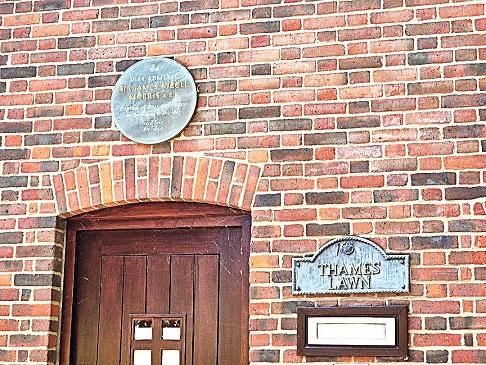
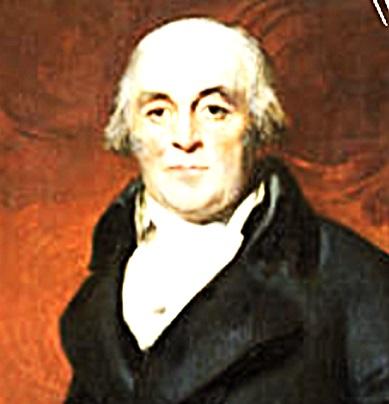
Among those present, following Collingwood, was Captain James Morris of Marlow, commanding HMS Colossus, which became the most damaged ship in the battle. He later retired to Thames Lawn as Vice-Admiral, bringing Trafalgar’s legacy home to Marlow.
Was the investment worth it?
The evidence suggests it was one of the most successful technological investments in British naval history. Copper sheathing allowed ships to sail faster, remain at sea longer, require fewer costly dockyard refits and develop more experienced crews. Combined with improvements in bolts, naval gunnery and inspired leadership, it gave Britain a decisive operational advantage over larger but less efficient fleets. A farsighted investment —that paid off four decades later, at Trafalgar.
Copper
For Thomas Williams, it was an extraordinary commercial opportunity which transformed him into one of the richest industrialists in Britain, earning him the title ‘The Copper King.’ For Britain, it was a strategic masterstroke. Today, examples of this sheathing can still be seen in the Williams chapel inside Bisham Church, a reminder of the village’s unexpected connection to global naval history. The legacy also survives not only in maritime history but also in everyday language. A ‘copper-bottomed’ guarantee still describes something completely reliable, secure and trustworthy.
Beneath the glory of Britain’s greatest naval victory lay thousands of carefully made copper plates, millions of expertly forged bolts, and the vision of those who recognised that the greatest victories can begin with solving a practical engineering problem.


Share